Pest control services Mobile property owners depend on must directly neutralize the severe biological pressures driven by coastal southwest Alabama's humid subtropical climate. The Mobile metropolitan area records an average of 66.3 inches of rainfall each year across 120 wet days, producing persistent environmental moisture that accelerates structural wood rot and sustains elevated subterranean pest colonies.
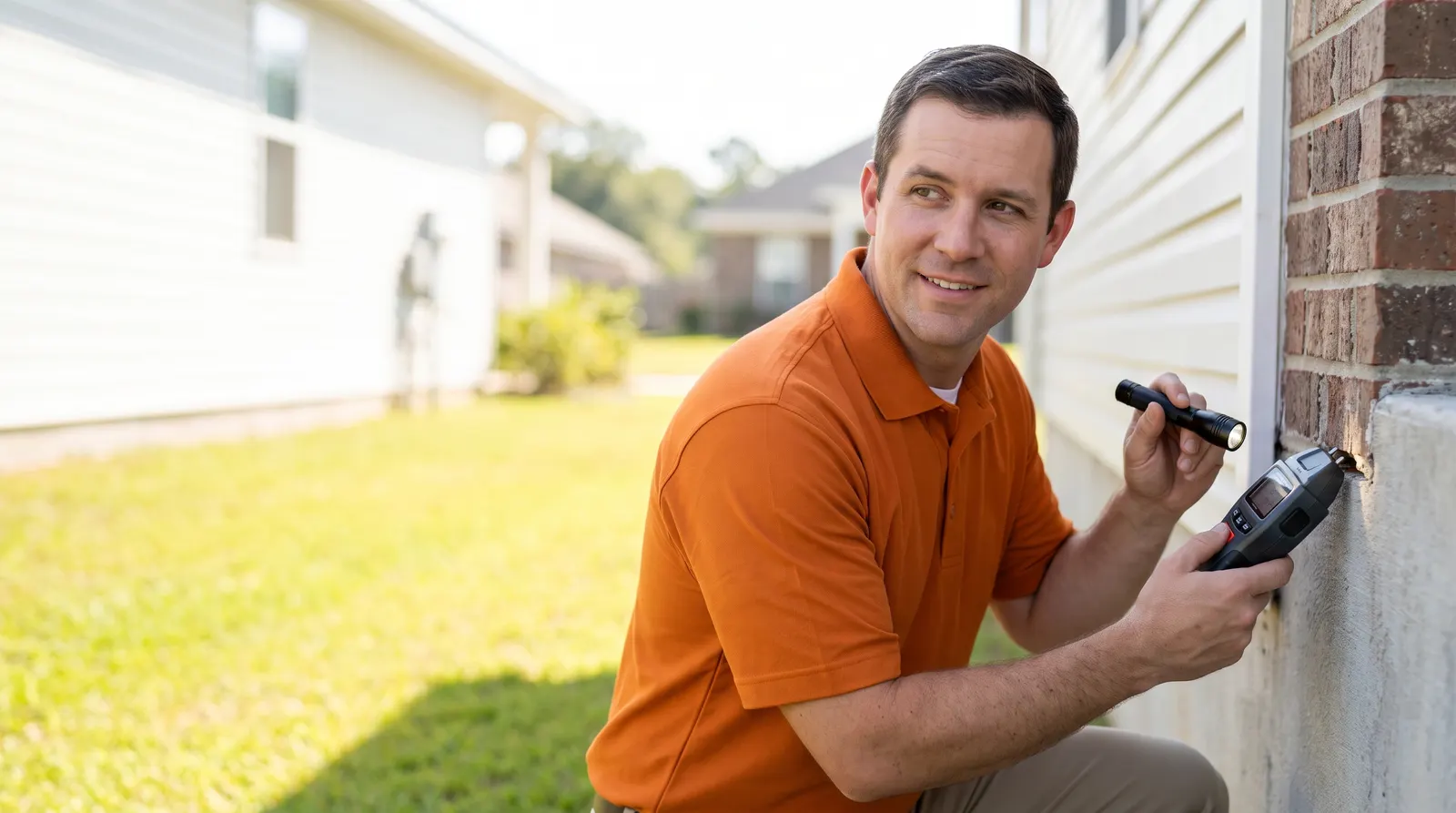
Pest control services in Mobile is a specialized extermination and biological management process that eliminates active infestations of Formosan subterranean termites, American cockroaches, mosquitoes, and rodents from residential and commercial structures.
Every service reflects the same meticulous attention to detail, whether it's a single job or a larger pest control services project across Mobile.
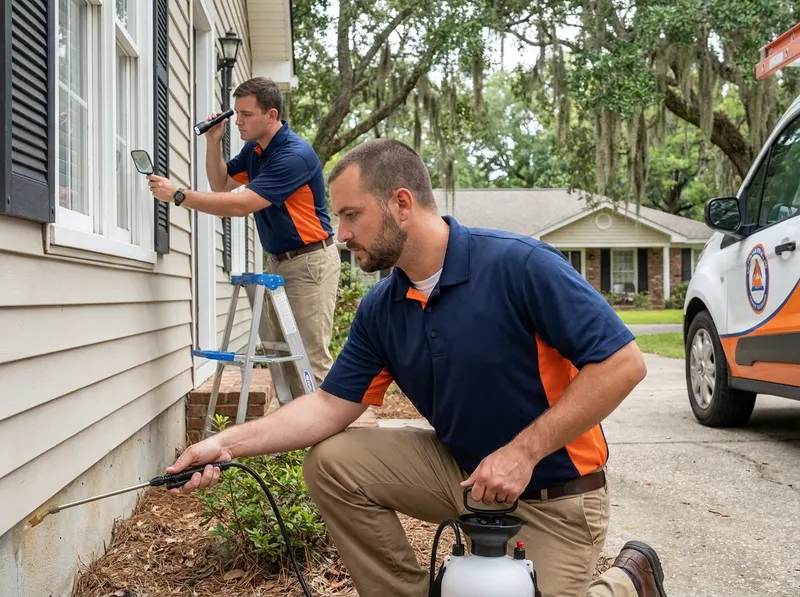
Comprehensive indoor and outdoor pest remediation targeting pervasive household crawling insects, domestic nuisance pests, and structural invaders across homes and commercial properties in Mobile County. Application protocols focus on deep flush-outs of wall voids, cabinet chases, mechanical closets, and plumbing penetrations using targeted botanical pyrethroids and non-staining microencapsulated suspensions. Exterior perimeters receive a five-foot protective soil and masonry barrier to prevent seasonal insect migrations inward. Targeted species include German cockroaches (Blattella germanica), American cockroaches (Periplaneta americana), smokybrown cockroaches, ghost ants, Argentine ants, firebrats, and silverfish without exposing living areas to unnecessary airborne chemical saturation.
Get a quote →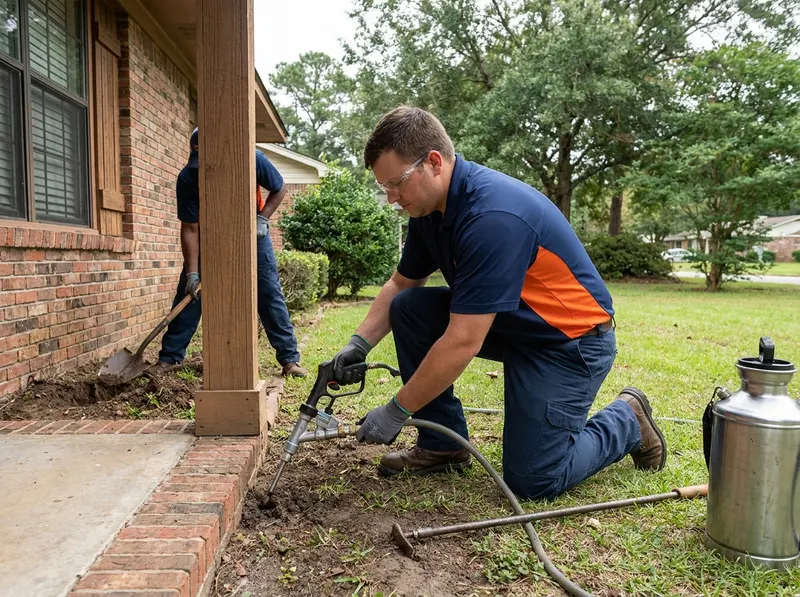
Specialized defensive and curative structural interventions directed against Coptotermes formosanus, the most aggressive wood-destroying organism operating in coastal Alabama. Treatment protocols incorporate hydraulic perimeter trenching and high-pressure rod-injection of non-repellent liquid fipronil termiticides at a standard application volume of 4 gallons per 10 linear feet per foot of depth along foundation footers, monolithic slab margins, and interior brick support piers. In addition, tamper-resistant in-ground bait stations charged with chitin synthesis inhibitors are installed every 10 to 15 feet along the drip line to intercept subterranean worker castes, transferring lethal active ingredients back to the reproductive core to collapse multi-million-member parent colonies.
Get a quote →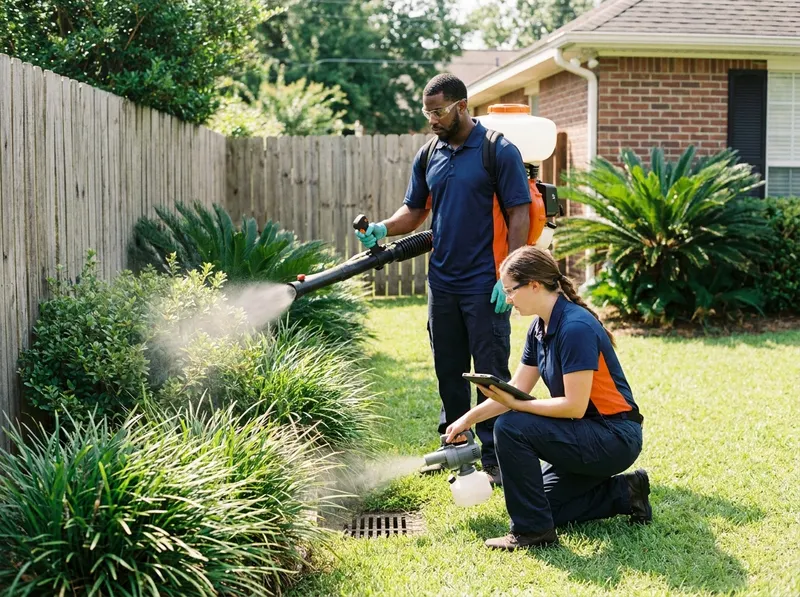
Integrated adulticide and larvicide barrier treatments engineered to interrupt the reproductive life cycle of Aedes albopictus (Asian tiger mosquito) and Culex quinquefasciatus (southern house mosquito) in humid coastal environments. High-output gas-powered mist blowers apply electrostatic residual micro-droplets directly to the undersides of dense foliage, ornamental shrubs, broadleaf groundcovers, and shaded soffit overhangs where adult mosquitoes harbor during daytime heat. Simultaneously, standing water retention zones, French drains, catch basins, and unchlorinated drainage ditches receive biological Bacillus thuringiensis israelensis (BTI) briquettes to eradicate aquatic larvae before adult emergence occurs.
Get a quote →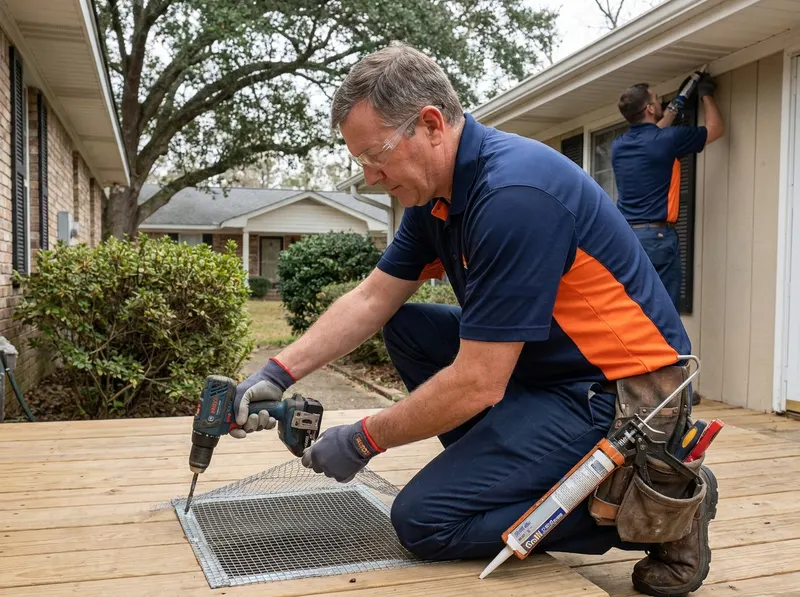
Permanent mechanical rodent-proofing and population removal engineered specifically for roof rats (Rattus rattus), Norway rats (Rattus norvegicus), and eastern grey squirrels in coastal dwellings. Technicians inspect roof lines, dormer junctions, fascia intersections, soffit returns, foundation crawl vents, and AC chase penetrations. All compromised access gaps larger than one-quarter inch are mechanically sealed using 19-gauge hot-dipped galvanized welded steel hardware cloth, high-density non-shrink polyether sealants, and custom-bent aluminum coil flashing. Internal trapping arrays are deployed inside attic access runs to eliminate trapped pests without the deployment of indoor poisons that risk animal decay inside finished interior walls.
Get a quote →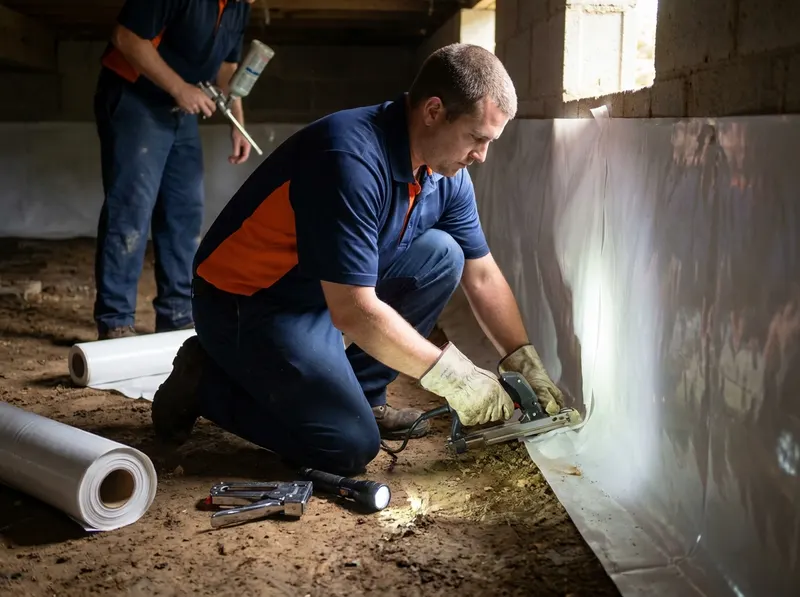
Complete environmental sub-floor mitigation engineered to drop structural relative humidity below 60 percent and lower subfloor timber moisture content below 15 percent, arresting subterranean termite harborage, powderpost beetle development, and wood-destroying white rot fungi. The process requires clearing existing debris, grading interior crawl soil, sealing exterior foundation vents with insulated masonry plugs, wrapping interior masonry support piers, and affixing a continuous 12-mil to 20-mil multi-ply fiber-reinforced polyethylene vapor barrier across 100 percent of the ground surface. Seams are joined using double-sided aggressive acrylic butyl tape, and an energy-efficient crawlspace dehumidifier is hard-piped with a dedicated condensation discharge line.
Get a quote →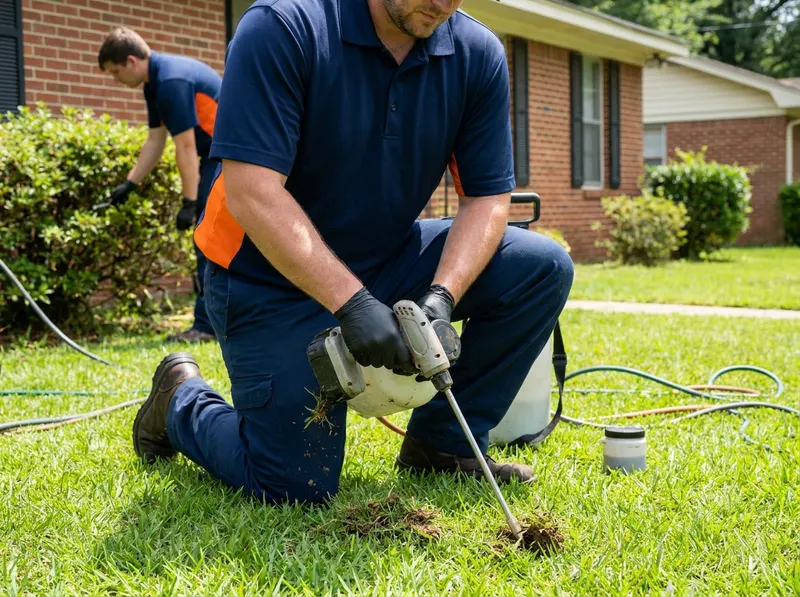
Granular and liquid insecticidal soil applications applied across warm-season turfgrasses including St. Augustine, Centipede, Zoysia, and Bermuda to control destructive subterranean and leaf-surface pests. Specialized broadcast spreader equipment applies targeted insect growth regulators and contact insecticides to eliminate southern chinch bugs (Blissus insularis), tawny mole crickets (Neoscapteriscus vicinus), and fall armyworms that cause widespread patch chlorosis and root destruction. Seasonal dual-action fire ant management combines granular hydramethylnon or fipronil baits across open acreage to eliminate imported fire ant (Solenopsis invicta) mounds, preventing lawn-to-foundation structural foraging.
Get a quote →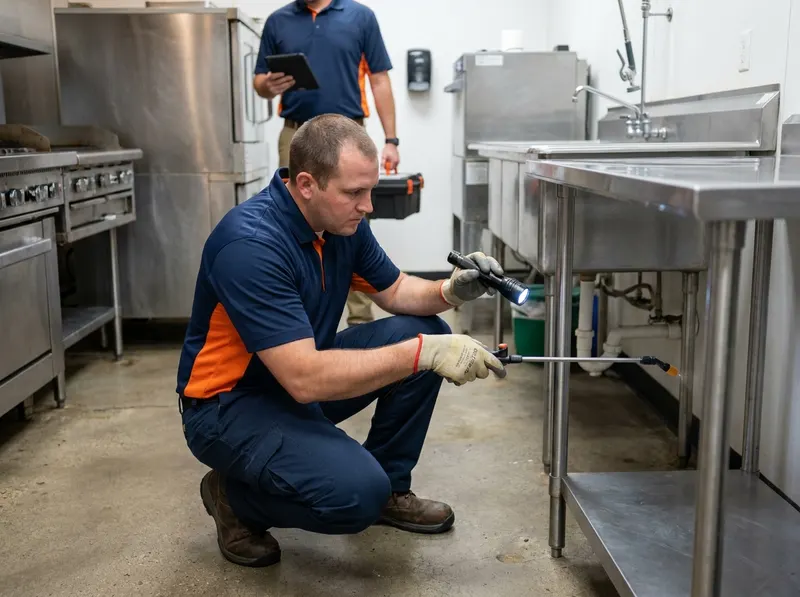
Strict, audit-ready Integrated Pest Management (IPM) protocols formulated specifically for commercial dining establishments, healthcare institutions, maritime shipping operations, food warehousing docks, and multifamily housing complexes across Mobile. Programs satisfy all regulations set by the Alabama Department of Agriculture and Industries, the Mobile County Health Department, and OSHA standards. Service components include tamper-proof external rodent monitoring stations placed at 30-to-50-foot perimeter intervals, barcoded internal mechanical multi-catch rodent traps, electronic insect light traps (ILTs) positioned away from food-contact surfaces, and non-volatile void bait gels placed strictly inside structural crevices.
Get a quote →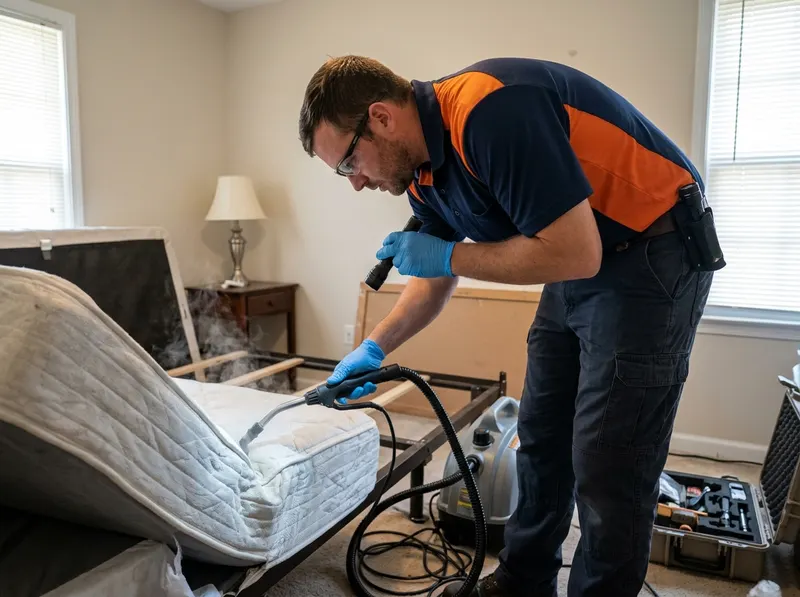
Targeted eradication protocols developed to rapidly eliminate Cimex lectularius infestations from single-family dwellings, short-term rental units, and hospitality spaces. The protocol utilizes a dual-method system combining high-output structural thermal convection heat, elevating interior room temperatures to a sustained, lethal thermal kill zone between 122°F and 135°F for a minimum of 4 continuous hours, alongside focused applications of residual desiccant dusts and insect growth regulators inside baseboard voids, mattress encasements, headboard screw channels, and electrical switch plates to ensure total egg and nymph mortality.
Get a quote →You get a firm, itemized quote for your pest control services before any work begins, no surprises, no pressure.
Careful prep, tidy work, and a full cleanup when we are done. We treat your home and belongings like our own.
The same trusted, background-checked team from the first call to the final check.
Selecting the correct structural intervention requires categorizing the target vector, the age of the structure, and the underlying moisture profile of the real estate. If a property displays active mud shelter tubes running up brick piers, sagging pine subflooring, or discarded alate wings along interior window sills between April and July, select a targeted liquid termiticide perimeter trenching application supplemented with exterior subterranean baiting stations. If the building instead displays nocturnal foraging by American cockroaches (commonly termed palmetto bugs), smokybrown roaches, or odorous house ants along kitchen plumbing chases and baseboards, choose an ongoing exterior microencapsulated perimeter defense applied on a 60-day or 90-day schedule.
The trade-off between targeted single-incident soil injection treatments and routine boundary applications centers on residual biological control versus immediate localized knockdown; localized treatments solve current colony incursions in targeted framing, whereas ongoing scheduled perimeter treatments prevent new colonies from establishing along foundation expansion joints and plumbing penetrations. When attic spaces, soffit corners, or drop ceilings exhibit gnawed electrical conduit, shredded fiberglass insulation, and directional rub marks, choose mechanical rodent exclusion rather than standalone anticoagulant baiting. Standalone rodent baiting reduces internal population numbers temporarily but leaves entry apertures open, resulting in carcass decomposition odor within dry-wall cavities; mechanical exclusion physically seals exterior roofline transitions, ridge vents, and crawlspace lattice using heavy-gauge metal wire mesh, providing permanent perimeter defense at a higher upfront mechanical labor cost.
For structures built over open dirt crawlspaces exhibiting sub-floor moisture content above 18 percent, surface chemical spraying offers only short-term insect suppression; full crawlspace encapsulation with an active commercial dehumidifier dries structural wood framing below the threshold required for subterranean termite and wood-boring beetle survival, representing a larger capital investment that simultaneously halts structural rot and terminates insect harborage.
Every project gets a firm, written price after a free on-site visit. Ranges below for orientation.
Tell us about your pest control services job and we'll send a clear, written quote, usually the same day. Or just call and talk to a real Mobile pro.
(251) 426-9785
Properties across Mobile County, spanning from the historical urban core out to West Mobile and the western shores of Mobile Bay, encounter complex pest dynamics fueled by high local water tables, severe relative humidity, and dense tree canopies. In older neighborhoods such as the Oakleigh Historic District, Dauphin Way Historic District, and Ashland Place, architectural construction relies heavily on raised continuous-pier brick foundations, heart-pine sills, and unvented or lattice-screened crawlspaces. These elevated subfloors lie mere feet above damp sandy loam soils, creating a continuous condensation chimney effect that draws Formosan subterranean termites and wood-boring powderpost beetles directly into structural floor joists. Because historic preservation codes limit aggressive exterior drilling through original brick facades, termite defense programs in these districts necessitate specialized sub-slab injection beneath interior hearths, horizontal soil rodding around sensitive perimeter footings, and non-destructive external baiting grids installed beneath root systems of centuries-old live oak trees (Quercus virginiana). In areas like Spring Hill and Llanfair, massive live oak and southern magnolia canopies drape across low-slope asphalt and metal roofs, depositing substantial volumes of decaying leaf litter in box gutters and providing immediate physical bridges for roof rats and smokybrown roaches into attic crawlways and fascia gaps. Further west in Cottage Hill and along heavy traffic arteries near Ladd-Peebles Stadium, newer monolithic concrete slab construction encounters subterranean movement driven by shifting soil water tables following severe summer cloudbursts and coastal tropical depressions. In these slab-on-grade homes, settling plumbing chases and expansion joints become direct entry highways for subterranean worker termites and aggressive Argentine ant supercolonies seeking dry indoor substrate. The near-total absence of extended sub-freezing temperatures during Mobile winters ensures uninterrupted, year-round breeding cycles for domestic cockroaches, fleas, and turf pests, requiring precise biological schedule tracking and barrier formulations engineered specifically to resist swift breakdown from direct solar ultraviolet radiation and high-volume coastal rainfall.
Free estimates for Mobile & the surrounding area.
 Valtrix Pest Control